
Holding Policymakers to Account:
Disability Rights, Decent Work, and Social Protection
WAG Disability Rights and DAPP Malawi have completed a landmark review of two national policies against Malawi's binding disability rights obligations — and the findings demand urgent action.
Why This Review Matters
Malawi has made real progress in building legal protections for persons with disabilities. The Persons with Disabilities Act 2024, ratification of the African Disability Protocol (ADP) in 2024, and the expanded National Social Protection Policy 2024–2029 are all substantive steps forward. But laws and policies on paper do not automatically change lives.
The United for Africa Disability Protocol (U4ADP) Project, implemented in Malawi by WAG Disability Rights and DAPP Malawi, set out to test that gap directly — to ask whether two of Malawi's key national policy frameworks actually deliver on the country's binding disability rights commitments, and if not, to say exactly what needs to change.
The two policies reviewed are:
- The National Employment and Labour Policy (2017) — which governs how Malawi expands decent work and protects workers' rights.
- The National Social Protection Policy 2024–2029 — which sets out how Malawi delivers social assistance, social insurance, and welfare services to its most vulnerable citizens.
Both were assessed against three binding instruments: the ADP (particularly Articles 19, 20, and 27); the UN Convention on the Rights of Persons with Disabilities (CRPD) (particularly Articles 6, 27, 28, and 31); and the Persons with Disabilities Act 2024.
Why the ADP and CRPD Matter for People with Disabilities
The UN Convention on the Rights of Persons with Disabilities (CRPD), which Malawi ratified in 2009, establishes that disability rights are human rights. It creates binding legal obligations — not aspirational goals — on how states design their employment systems, social protection programmes, and data collection processes. Article 27 covers the right to work and employment. Article 28 covers the right to an adequate standard of living and social protection. Article 6 places specific obligations on states regarding women with disabilities, who face multiple, overlapping forms of discrimination. Article 31 requires states to collect and analyse disaggregated data so that rights can actually be monitored.
The African Disability Protocol, which Malawi ratified in 2024, goes further. It grounds disability rights in an African philosophy that explicitly names harmful cultural attitudes, stigma, and harmful practices as structural barriers that states must address. Article 19 establishes the right to decent work. Article 20 establishes the right to social protection. Article 27 places specific obligations on the rights of women and girls with disabilities — recognising that gender and disability together create compounding, intersecting barriers that generic policy has consistently failed to address.
The critical point: When a national policy fails to reflect these binding obligations, it is not simply a technical gap. It means that persons with disabilities — and particularly women and girls with disabilities — are being left out of protections they are legally entitled to. Both the ADP and CRPD require specific, targeted provisions, not general statements about inclusion. When disability is folded into broad equality language, experience shows it consistently disappears from implementation.
What the Review Found
National Employment and Labour Policy
The central structural problem is straightforward. Malawi's Employment Policy is built for workers in formal jobs — but approximately nine in ten workers in Malawi, including most persons with disabilities, work in the informal economy. The policy's protections simply do not reach them. A second anomaly compounds the problem: the Employment Act (2000) was enacted seventeen years before the Employment Policy (2017), reversing the normal relationship between policy and law. The policy must now do the work of driving reform of legislation that preceded it — but provides no roadmap for this.
| Gap Area | Finding |
|---|---|
| Formal-sector bias | Most persons with disabilities work informally and are entirely outside the policy's scope of protection. |
| Policy–legislation sequencing | The Employment Act predates the Employment Policy by 17 years, with no reform roadmap in the policy. |
| Reasonable accommodation | The PDA 2024 creates a legal obligation on workplace adjustments. The Employment Policy does not operationalise it. |
| Women and girls with disabilities | The gender–disability intersection is entirely unaddressed. Women with disabilities face discriminatory hiring, harassment, and inaccessible workplaces. |
| Vocational training access | MACODA training centres are concentrated in urban areas. About 80% of MACODA's budget goes to salaries, leaving little for programmes. |
| Monitoring and data | Labour force surveys do not disaggregate data by disability status. Without data, the policy cannot be monitored or held accountable. |
National Social Protection Policy 2024–2029
The expanded 2024 Social Protection Policy is more ambitious than its predecessor. But ambition and delivery are different things. A structural exclusion gap runs through the Policy's targeting logic: persons with disabilities are often too poor for Public Works Programmes, which require physical capacity, yet not classified as 'ultra-poor' enough for the Social Cash Transfer Programme. They fall between both programmes and receive neither.
| Gap Area | Finding |
|---|---|
| Disability-specific targeting | The Policy expands its scope but does not specify how persons with disabilities will be identified, targeted, or monitored within the Unified Beneficiary Registry (UBR). |
| Women and girls with disabilities | Informal gatekeeping, inaccessible registration, and absent disaggregated targeting mean women with disabilities consistently disappear from programme data. |
| Contributory social insurance | Social insurance is employment-based. Most persons with disabilities work informally and are excluded. |
| Data and monitoring systems | It is unclear whether the UBR captures disability type, severity, or intersecting characteristics. Without this data, accountability is not possible. |
| Fragmentation and coordination | The Ministry of Labour routinely refers persons with disabilities to the Ministry of Gender, creating an institutional responsibility gap at district level. |
Building the Evidence: Stakeholder Consultations
The review did not stop at desk research. Its findings were tested, deepened, and validated through two rounds of structured stakeholder consultations — first at district level, then at national level. Both meetings brought together persons with disabilities, Organisations of Persons with Disabilities (OPDs), civil society organisations, community advocates, and government officials.
Phase 1: Desk Review (13–19 April 2026)
The first phase involved a structured documentary analysis of both policies against the ADP, CRPD, and Persons with Disabilities Act 2024. Dr. George Mwika Kayange, appointed as independent research and policy consultant for the assignment, applied a five-dimension analytical framework covering normative alignment, coverage gaps, implementation provisions, ADP alignment, and data and monitoring systems. This phase produced the Desk Review Report, which identified six gap findings for the Employment Policy and five for the Social Protection Policy.
Phase 2: Combined Lilongwe and Dowa District Consultation (24 April 2026)
The district consultation brought together OPD representatives, women and girls with disabilities, Councillors, a Member of Parliament, and government officials from both Lilongwe and Dowa districts. All six Employment Policy gaps and all five Social Protection Policy gaps from the desk review were confirmed by participants from their own experience. Three new findings emerged that had not been anticipated in the documentary analysis.
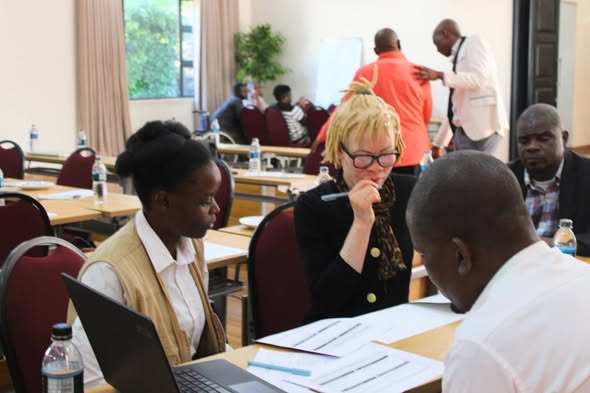
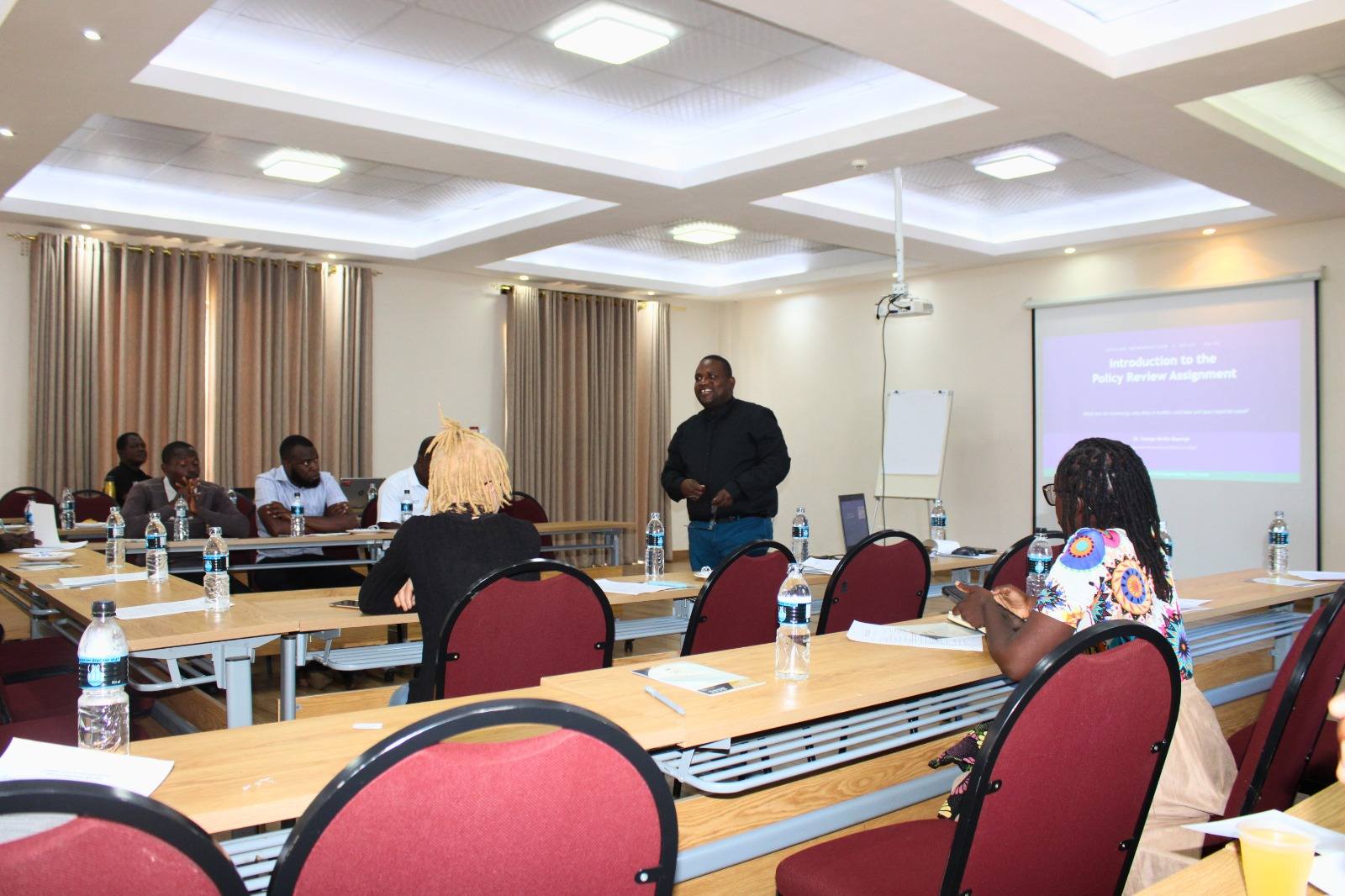
Participants at the district meeting confirmed that persons with disabilities who seek employment are perceived as beggars rather than job seekers. They confirmed that tools and materials are routinely withheld, leading workers with disabilities to be labelled incompetent. They confirmed that the Unified Beneficiary Registry does not identify persons with disabilities as a specific category, and that deliberate exclusion by local leaders — councillors, chiefs, and Village Development Committee chairs — is a real and consistent barrier to social protection access.
We believe we are competent, but we are not given the equipment we need. Give us the equipment and see if we are incompetent.
— Participant, Combined Lilongwe and Dowa District Consultation, 24 April 2026Phase 3: National Policy Dialogue Meeting (4 May 2026)
The national meeting was the culminating stakeholder event of the review process. It brought together national-level OPDs, civil society organisations, community representatives, and government officials. Welcoming remarks were delivered by Mr. Moses Chibwana, Country Director of DAPP Malawi. Opening remarks were delivered by Ms. Stella Nkhonya, Executive Director of WAG Disability Rights. Ms. Christina Mkanyoza presented the U4ADP project overview, and Dr. Kayange facilitated all substantive sessions.
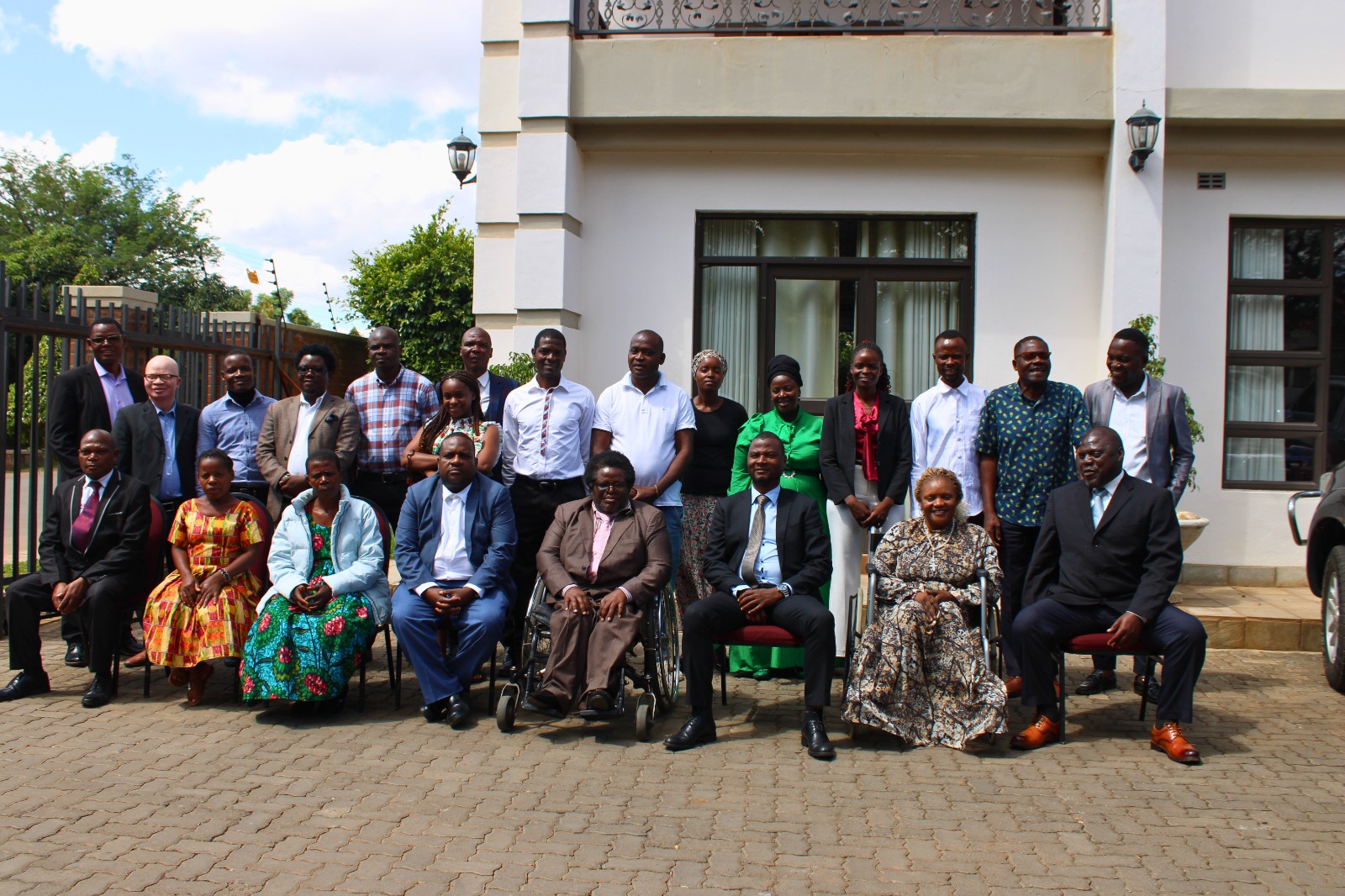
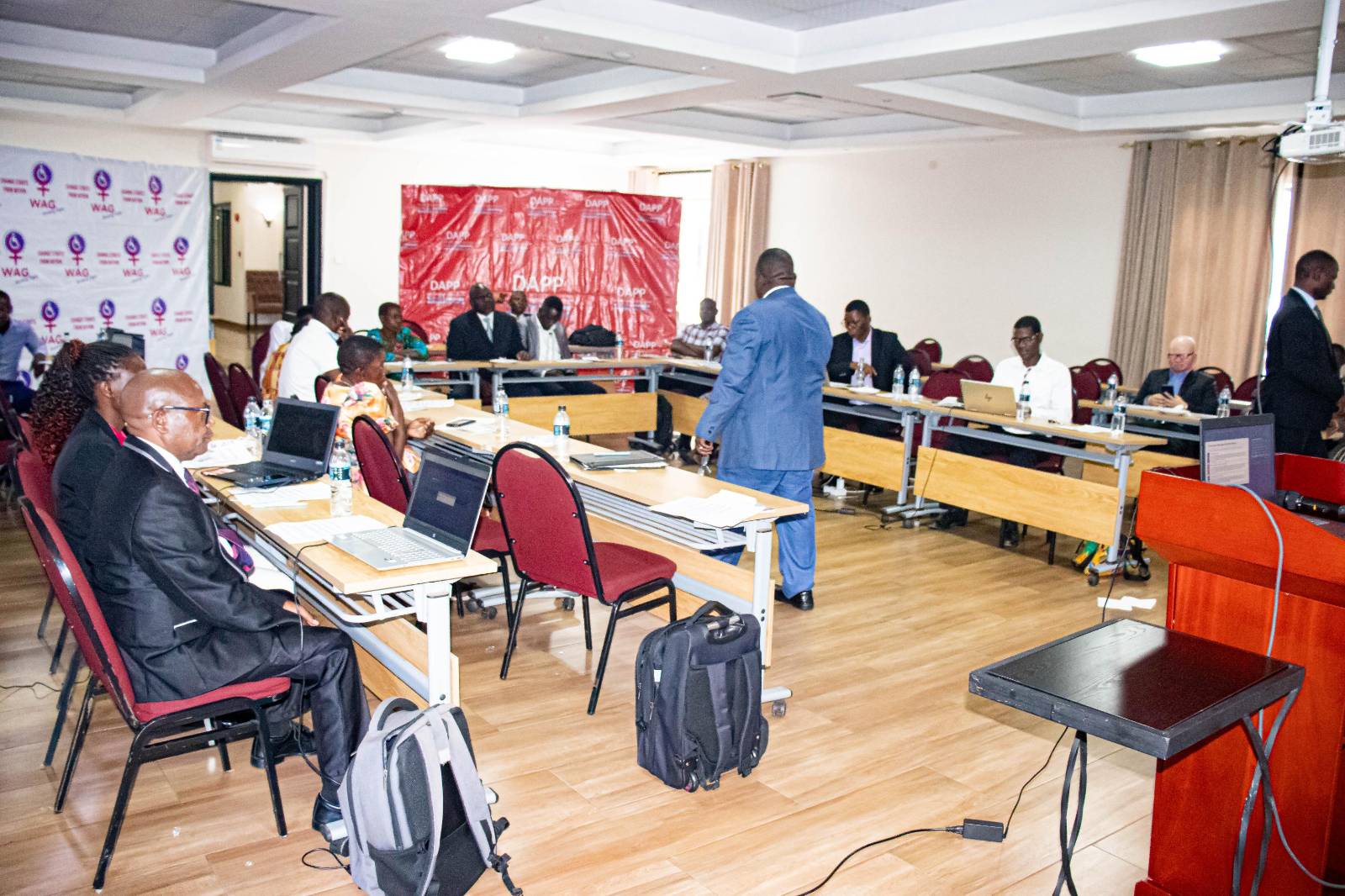
At the national meeting, a striking finding emerged: none of the participants present — OPD representatives, civil society staff, and government officials — had thoroughly read the 2024 National Social Protection Policy. This confirmed a deep awareness gap at the very level of society most responsible for implementing the policy.
None of us in this room has thoroughly read the 2024 National Social Protection Policy. If we have not read it, how do we engage with it? And if we cannot engage with it, how does it reach the people it is supposed to help?
— Participant, National Policy Dialogue Meeting, 4 May 2026The meeting validated all ten recommendations across both policies — five per policy — and agreed an advocacy strategy for engaging Parliament and the relevant government ministries. These recommendations form the backbone of the two policy briefs issued in May 2026.
The Policy Briefs: From Evidence to Action
The two civil society policy briefs translate the review's findings into clear, evidence-based demands addressed to duty bearers. They are designed for immediate use by WAG Disability Rights and its OPD partners in engaging parliamentarians, parliamentary portfolio committees, and senior government officials.
Policy Brief 1: Disability Rights and Decent Work
Closing the Gaps in the National Employment and Labour Policy
Addressed to the relevant Parliamentary Committee on Labour matters and the Ministry of Labour. The brief presents six confirmed gap findings and five priority recommendations for policy reform.
Data and Monitoring
Disaggregate all labour force data by disability type, severity, gender, and location. NSO must include disability classification in all future surveys.
5% Employment Quota
Introduce a mandatory 5% employment quota for persons with disabilities across all government and private sector employers, with financial penalties for non-compliance.
Labour Inspection and Training
Embed disability inspection as a formal, performance-appraised function for all labour officers. Require all HR officers to complete disability-inclusive recruitment training by December 2028.
Reasonable Accommodation
Operationalise the PDA 2024 obligation through the Employment Policy — mandating sign language interpreters, braille materials, adaptive equipment, and emergency alert systems in all workplaces.
Policy Brief 2: Disability Rights and Social Protection
Closing the Gaps in the National Social Protection Policy
Addressed to the Parliamentary Committee on Gender, Community Development and Social Welfare, and the Ministry of Gender. The brief presents five confirmed gap findings and five priority recommendations — including three additional findings that emerged from stakeholder consultations and were not anticipated in the desk review.
Redesign the UBR
Redesign the Unified Beneficiary Registry to explicitly identify and track persons with disabilities. Disability type, severity, gender, and location must be mandatory fields.
5% Disability Quota in Social Protection
Introduce a 5% disability quota across all major social protection programmes, calibrated to level of disability and poverty, in consultation with MACODA.
MACODA District Funding
Increase MACODA district-level funding to a level adequate for meaningful service delivery, with ring-fenced budget commitments in the next national budget cycle.
Embed OPDs in NSPP Governance
Formally embed OPDs and civil society organisations in the governance, identification, and monitoring of the NSPP. Government must work through OPDs, not around them.
When you put women and girls with disabilities inside a general provision, they disappear. We have seen it happen too many times. They need their own section, their own provision, their own targets.
— Participant, National Policy Dialogue Meeting, 4 May 2026Women and Girls with Disabilities: A Specific and Urgent Obligation
Both the ADP and the CRPD place specific obligations on states regarding women and girls with disabilities. This is not a sub-category of disability rights — it is a distinct and urgent legal obligation that neither the Employment Policy nor the Social Protection Policy currently meets.
The evidence from this review is consistent: women and girls with disabilities face compounding barriers that neither gender policy nor disability policy currently addresses together. These include informal gatekeeping by family members who control access to registration; inaccessible registration processes requiring physical travel over long distances; discriminatory hiring, harassment, and job assignment in the workplace; and nominal inclusion in beneficiary lists without meaningful participation or receipt of benefits.
The recommendations are clear: A stand-alone provision for women and girls with disabilities must be included in both the Employment Policy and the Social Protection Policy — with specific targets, indicators, and accountability mechanisms. Affirmative action quotas are needed beyond generic mainstreaming. Inclusive programmes for women and girls with disabilities must be designed as sustainable, long-term interventions, not time-limited project activities.
Taking the Evidence to Parliament and Government
Producing evidence is only half the work. At the National Policy Dialogue Meeting on 4 May 2026, participants agreed a clear advocacy strategy for taking the policy briefs to duty bearers.
Identifying Parliamentary Advocates
OPD leaders from both Dowa and Lilongwe will identify OPDs to engage directly with Parliamentarians, alongside individuals from the disability rights community who will deliver personal testimonies. Three individuals from Lilongwe and one from Dowa were identified by 8 May 2026.
Formal Submission to the Ministry of Gender
The meeting agreed on a formal petition to the Minister of Gender, Community Development and Social Welfare. This will be submitted as a structured engagement on the UBR reform, the disability quota, and MACODA funding. Existing contacts within the Ministry will be used to facilitate the approach.
Press Release and Media Coverage
WAG Disability Rights will issue a press release once parliamentary and ministerial engagements are under way. A joint communications team, drawing on both DAPP Malawi and WAG Disability Rights, will provide consistent media coverage of the advocacy process.
OPD Monitoring and Community Accountability
OPDs will continue to play a central role as accountability actors — monitoring implementation of the NSPP, supporting UBR registration, and certifying eligibility of persons with disabilities for social protection. This is not a project role. It must be formally recognised and resourced by government as a permanent function.
Download the Policy Briefs and Desk Review Report
All three documents are available as open-access PDFs for use by OPDs, civil society organisations, government officials, and the public.
- Policy Brief: Disability Rights and Decent Work Closing the Gaps in the National Employment and Labour Policy · PDF
- Policy Brief: Disability Rights and Social Protection Closing the Gaps in the National Social Protection Policy · PDF
- Desk Review Report Review of the National Employment and Labour Policy and National Social Protection Policy · PDF
Join the Advocacy
The recommendations from this review are ready for action. Share the policy briefs, support the parliamentary engagement, and help ensure that Malawi's disability rights commitments are translated from law into reality for every person with a disability in Malawi.
Contact WAG Disability Rights